

Medical/Health Humanities Research Group
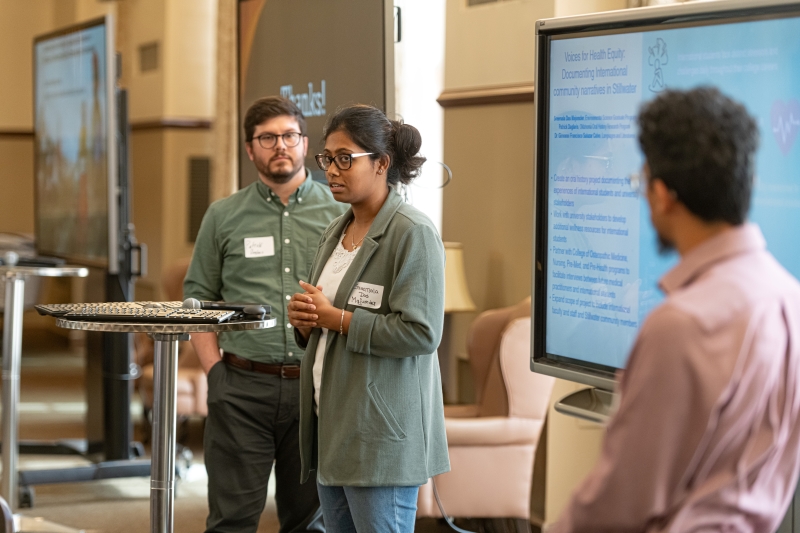
Medical and Health Humanities Members
-
Patrick Daglaris, Oklahoma Oral History Research Program, OSU Library
-
Sreemala Das Majumder, Environmental Science
-
Dr. Giovanni Francisco Salazar Calvo, Languages and Literatures
Voices for Health Equity: Documenting international community narratives in Stillwater to enhance resources, relationships, and outcomes with healthcare systems
Understanding the institutional components of health care and its economic and social
ramifications can be intricate for international students at U.S. universities. For
instance, students from countries where mental health is stigmatized may be unfamiliar
with university counseling services or hesitant to seek psychological support. Others
may come from regions where alternative medicine and traditional healing practices
are widely used, making it difficult to immediately trust or understand the Western
healthcare model. Furthermore, the high cost of medical care in the U.S.—even with
student health insurance—can be daunting for students from countries with more affordable
or government-funded healthcare systems. Additionally, U.S. health providers require
a high degree of intercultural competence to effectively support patients from diverse
cultural backgrounds.
What strategies can promote mutual understanding and adaptation between international
students and healthcare providers to improve access to and quality of care? How can
communication gaps among key stakeholders be effectively reduced?
International students often rely on self-care practices, bringing with them a wealth
of cultural expectations and traditions that may not align with the norms of the U.S.
healthcare system. Differences in concepts of community, doctor-patient relationships,
and worldviews all shape how they approach their own health and well-being. Language
barriers, cultural differences, and financial constraints can further limit their
access to institutional healthcare or discourage them from seeking it altogether.
In what ways can institutional health systems be more culturally responsive to the
needs of international students, fostering trust and inclusivity in the care process?
We are interested in researching ways to enhance communication between health providers
and the international community to promote mutual understanding, starting with international
students at Oklahoma State University. While conducting interviews with international students we also plan to engage university stakeholders on campus who support or work with international students to better understand existing support structures and perceived barriers. From the student narratives and stakeholders meetings we hope to develop accessible tools for international students make sense of the US healthcare system both on and off campus. We also aim to research ways of promoting the strengthening and appreciation of
self-care practices brought by international students to the US. Additionally, we want to provide learning opportunities for future health providers to engage international students through facilitated interviews between OSU medical and international students. For instance, we want to gather practical pre-interview strategies, often taken
for granted, like setting a comfortable tone and building empathetic and compassionate
rapport. In addition, techniques for interviewing in oral history can assist health providers in enhancing their skills for listening, asking appropriate questions, and developing a trusting relationship with the patient.